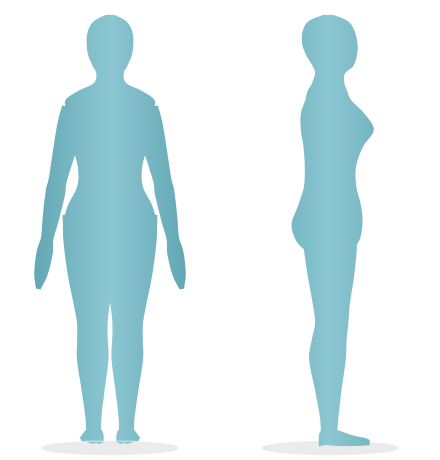
 BMI 17
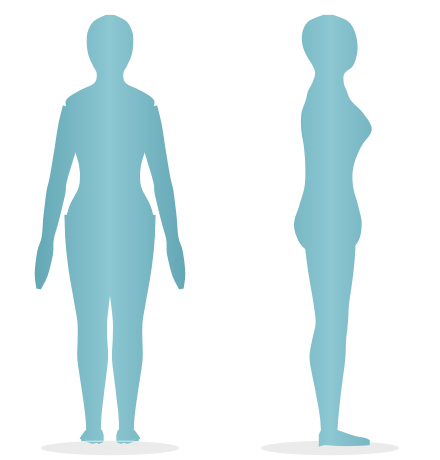 BMI 19
 BMI 23
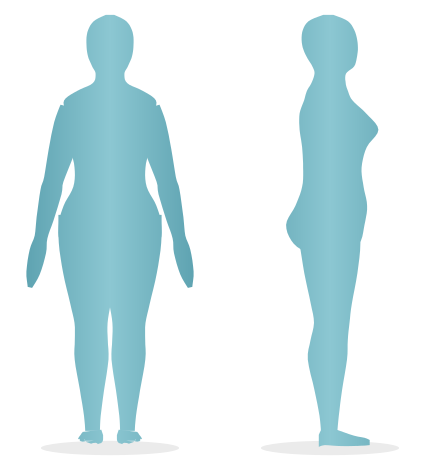 BMI 25
What Does BMI 21 Look Like on a Female?
At BMI 21, a woman typically has a healthy, well-proportioned figure. The waist is clearly defined, the abdomen is flat or gently curved, and the hips and thighs have a natural, feminine shape without excess fat. Arms and legs are slim but not skeletal. This body shape is what many consider "naturally slim" — healthy and energetic-looking.
BMI 21 is often described as the ideal midpoint of the healthy range. It is neither at the skinny extreme (BMI 18–19) nor approaching the fuller end (BMI 23–24). Women at this BMI typically fit well into standard clothing sizes and feel comfortable and confident in their bodies. Use our female BMI visualizer to see this shape in 3D.
Health Information for BMI 21 in Women
BMI 21 is associated with excellent health outcomes for most women. It sits in the middle of the healthy weight range, far from both the underweight threshold (18.5) and the overweight threshold (25). Women at this BMI have the lowest statistical risk of weight-related health conditions including cardiovascular disease, type 2 diabetes, and metabolic syndrome.
Maintaining BMI 21 is relatively straightforward for most women through a balanced diet and moderate activity levels. This BMI does not require extreme dietary restriction or excessive exercise — it is the kind of weight that can be maintained sustainably as a natural lifestyle.
For women who are above BMI 21 and working to reach this range, gradual weight loss at 0.5–1 kg per week through small dietary adjustments and increased movement is the safest and most sustainable approach. Our weight loss visualizer can help map out the journey.
BMI 21 female: weight for every height
The weight that gives a BMI of 21 depends on height. The highlighted row is the 163 cm reference height used for the images on this page.
| Height | Kilograms | Stones | Pounds |
|---|---|---|---|
| 4ft 10in (147 cm) | 45.6 kg | 7 st 2 lb | 100 lb |
| 4ft 11in (150 cm) | 47.2 kg | 7 st 6 lb | 104 lb |
| 5ft 0in (152 cm) | 48.8 kg | 7 st 10 lb | 108 lb |
| 5ft 1in (155 cm) | 50.4 kg | 7 st 13 lb | 111 lb |
| 5ft 2in (157 cm) | 52.1 kg | 8 st 3 lb | 115 lb |
| 5ft 3in (160 cm) | 53.8 kg | 8 st 7 lb | 119 lb |
| 5ft 4in (163 cm) | 55.5 kg | 8 st 10 lb | 122 lb |
| 5ft 5in (165 cm) | 57.2 kg | 9 st 0 lb | 126 lb |
| 5ft 6in (168 cm) | 59.0 kg | 9 st 4 lb | 130 lb |
| 5ft 7in (170 cm) | 60.8 kg | 9 st 8 lb | 134 lb |
| 5ft 8in (173 cm) | 62.6 kg | 9 st 12 lb | 138 lb |
| 5ft 9in (175 cm) | 64.5 kg | 10 st 2 lb | 142 lb |
| 5ft 10in (178 cm) | 66.4 kg | 10 st 6 lb | 146 lb |
| 5ft 11in (180 cm) | 68.3 kg | 10 st 11 lb | 151 lb |
| 6ft 0in (183 cm) | 70.2 kg | 11 st 1 lb | 155 lb |
How far is BMI 21 from a healthy weight?
At 163 cm, BMI 21 is 55.8 kg (8 st 11 lb). The healthy range at this height runs from 49.2 kg to 66.2 kg, so a woman at BMI 21 is 6.6 kg above the lower limit and 10.4 kg below the upper limit.
That leaves a comfortable margin on both sides.
What the NHS and NICE suggest at BMI 21
A BMI of 18.5 to 24.9 is in the healthy range, which is linked with the lowest average risk of weight-related illness. The aim here is to stay in the range as you get older, when weight tends to creep up by a small amount each year.
The UK Chief Medical Officers recommend at least 150 minutes of moderate activity a week, such as brisk walking or cycling, plus muscle-strengthening activity on two days. Check your waist now and then too: if it is more than half your height, it is worth acting even with a healthy BMI.
With NICE’s lower thresholds for people of South Asian, Chinese, other Asian, Middle Eastern, Black African or African-Caribbean background, BMI 21 is still in the healthy range.
Whatever your BMI, measure your waist. At 163 cm, a waist under 82 cm (32 in) means a healthy waist-to-height ratio. Between 82 and 98 cm the risk is increased, and above 98 cm it is high.
Sources
The body shapes on this site are illustrations generated from height, weight and sex. They show a typical build and cannot show your own muscle, frame or fat distribution. BMI is a screening measure for adults aged 18 and over; it is not a diagnosis and is not valid during pregnancy. Speak to your GP or a registered dietitian for personal advice. Full disclaimer.