
 BMI 27
 BMI 29
 BMI 33
 BMI 35
What Does BMI 31 Look Like on a Female?
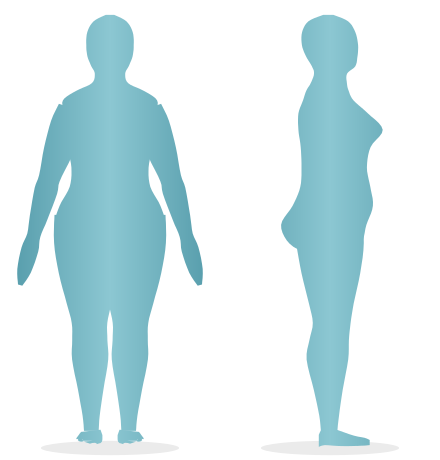
At BMI 31, a woman has a clearly rounded, full figure with excess body fat visible across multiple areas. The abdomen is prominent and soft, the hips and thighs are substantial, and the upper arms have noticeable roundness. The face appears full with less jawline definition. There is no visible waist distinction from the front — the body has a uniform, round silhouette.
This figure is common in Western populations, particularly among women aged 35–55 where metabolic changes and reduced activity levels contribute to gradual weight gain. Women at BMI 31 are often wearing UK dress sizes 18–20 and may find physical activities such as climbing stairs, long walks, or exercise classes more tiring than they used to.
At 163 cm, BMI 31 corresponds to 82.4 kg. Returning to a healthy BMI of 24.9 at this height requires losing approximately 18.6 kg — a significant but achievable goal over 12–18 months with structured support.
Health Information for BMI 31 in Women
At BMI 31, the health risks associated with obesity are well-established and clinically significant. Type 2 diabetes risk is substantially elevated — studies suggest women at this BMI have 30–40 times the diabetes risk of women at BMI 22. Regular HbA1c and fasting glucose testing is strongly recommended.
Cardiovascular health is a key concern. Blood pressure, LDL cholesterol, and triglycerides are frequently elevated at this BMI. The heart is working harder at every activity level, increasing long-term strain. Women at BMI 31 who smoke or have a family history of heart disease face compounded risk and should seek medical review.
Sleep apnoea, which disrupts sleep and strains the cardiovascular system, becomes more prevalent in the obese range. Women often experience different presentations than men — more daytime fatigue and insomnia rather than obvious snoring — and may go undiagnosed. A GP referral for a sleep study is advisable if sleep disruption is present.
Professional support — including GP referral to NHS Tier 2 weight management programmes, behavioural therapy, and registered dietitian guidance — is strongly recommended at this level. Crash dieting is counterproductive; structured, evidence-based programmes yield better and more sustainable outcomes.
BMI 31 female: weight for every height
The weight that gives a BMI of 31 depends on height. The highlighted row is the 163 cm reference height used for the images on this page.
| Height | Kilograms | Stones | Pounds |
|---|---|---|---|
| 4ft 10in (147 cm) | 67.3 kg | 10 st 8 lb | 148 lb |
| 4ft 11in (150 cm) | 69.6 kg | 10 st 13 lb | 153 lb |
| 5ft 0in (152 cm) | 72.0 kg | 11 st 5 lb | 159 lb |
| 5ft 1in (155 cm) | 74.4 kg | 11 st 10 lb | 164 lb |
| 5ft 2in (157 cm) | 76.9 kg | 12 st 1 lb | 169 lb |
| 5ft 3in (160 cm) | 79.4 kg | 12 st 7 lb | 175 lb |
| 5ft 4in (163 cm) | 81.9 kg | 12 st 13 lb | 181 lb |
| 5ft 5in (165 cm) | 84.5 kg | 13 st 4 lb | 186 lb |
| 5ft 6in (168 cm) | 87.1 kg | 13 st 10 lb | 192 lb |
| 5ft 7in (170 cm) | 89.8 kg | 14 st 2 lb | 198 lb |
| 5ft 8in (173 cm) | 92.5 kg | 14 st 8 lb | 204 lb |
| 5ft 9in (175 cm) | 95.2 kg | 15 st 0 lb | 210 lb |
| 5ft 10in (178 cm) | 98.0 kg | 15 st 6 lb | 216 lb |
| 5ft 11in (180 cm) | 100.8 kg | 15 st 12 lb | 222 lb |
| 6ft 0in (183 cm) | 103.7 kg | 16 st 5 lb | 229 lb |
How far is BMI 31 from a healthy weight?
At 163 cm, BMI 31 is 82.4 kg (13 st 0 lb). The top of the healthy range at this height is 66.2 kg (10 st 6 lb), so reaching a healthy BMI would mean losing about 16.2 kg (2 st 8 lb). Dropping into the category below (under BMI 30) would take 2.9 kg.
You do not need to get all the way there to feel the benefit. A 5% loss is 4.1 kg and a 10% loss is 8.2 kg; both are linked with lower blood pressure and blood sugar. At a steady 0.5 kg a week, 5% would take about 8 weeks and reaching the healthy range about 32 weeks.
What the NHS and NICE suggest at BMI 31
A BMI of 30 to 34.9 is classed as obesity (class 1). It significantly raises the risk of type 2 diabetes, heart disease, some cancers, sleep apnoea and joint problems.
Your GP can talk through your options and may refer you to a local weight management service, which offers group or one-to-one support with diet, activity and behaviour. For some people with weight-related conditions, NICE-recommended weight-loss medicines may also be considered as part of a wider plan. The free NHS Weight Loss Plan app is a good place to start.
With NICE’s lower thresholds for people of South Asian, Chinese, other Asian, Middle Eastern, Black African or African-Caribbean background, each obesity class starts 2.5 points lower, so BMI 31 is treated as class 1 obesity.
Whatever your BMI, measure your waist. At 163 cm, a waist under 82 cm (32 in) means a healthy waist-to-height ratio. Between 82 and 98 cm the risk is increased, and above 98 cm it is high.
Sources
The body shapes on this site are illustrations generated from height, weight and sex. They show a typical build and cannot show your own muscle, frame or fat distribution. BMI is a screening measure for adults aged 18 and over; it is not a diagnosis and is not valid during pregnancy. Speak to your GP or a registered dietitian for personal advice. Full disclaimer.