
 BMI 27
 BMI 29
 BMI 33
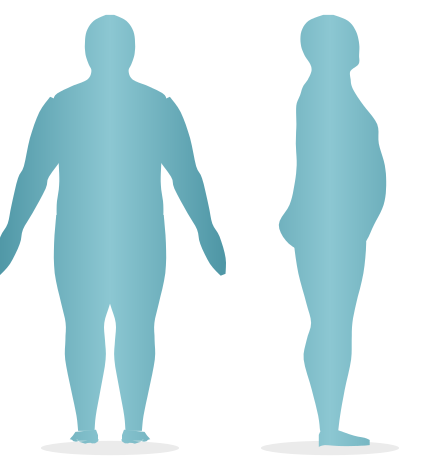 BMI 35
What Does BMI 31 Look Like on a Man?
At BMI 31, a man is one point into the obesity range and this registers clearly in physical appearance. The belly is large and rounded, with a significant protrusion both forward and downward. The abdomen at this size begins to develop a pendulous quality — the lower portion of the gut may sag somewhat over the trouser waistband. This is the body shape commonly associated in the popular imagination with a "beer gut" that has progressed beyond a casual "dad bod."
The love handles at BMI 31 are substantial — thick rolls of soft fat on the lateral flanks visible through most clothing. The lower back and buttocks are padded. Standing side-on, the stomach clearly extends further forward than the chest. The man's centre of gravity has shifted anteriorly, which often causes mild compensatory extension of the lumbar spine, contributing to lower-back discomfort and postural changes.
The face is round and full, with a clear double chin. The neck has increased in circumference to 40–43 cm in most men at this BMI, resulting in thicker shirt collars. The chest may also carry some fat, giving a slightly gynecomastic appearance in some men — caused by oestrogen elevation from testosterone aromatisation in visceral fat.
Daily physical activity is limited. Sustained walking of more than a mile, climbing multiple flights of stairs, or jogging becomes genuinely effortful. Many men at BMI 31 find themselves short of breath after moderate exertion. The combination of respiratory limitation and joint discomfort (particularly in the knees) creates a self-reinforcing cycle that makes it harder to be physically active.
Health Risks of BMI 31 for Men
BMI 31 shares the health risk profile of Obese Class I broadly, with risks compounding as BMI increases through the 30–35 range. Key concerns for men at BMI 31 include:
- Cardiovascular disease: elevated blood pressure (typically 8–15 mmHg above healthy weight), atherogenic lipid profile, left ventricular hypertrophy risk
- Type 2 diabetes: substantially elevated insulin resistance, often pre-diabetic fasting glucose; HbA1c testing is advisable
- Sleep apnoea: prevalent in obese men; heavy snoring and unrefreshed sleep warrant a sleep study referral
- Joint loading: knee and hip loading equivalent to carrying a 19 kg rucksack continuously; accelerates osteoarthritis
- Testosterone: typically 15–25% below healthy-weight age-matched baseline; may present as low energy, low libido, and impaired muscle recovery
- Non-alcoholic fatty liver disease (NAFLD): very common at BMI ≥30 due to hepatic lipid accumulation driven by visceral fat and insulin resistance
A BMI 31 man is also nearing the 100 kg mark at 178 cm (98.2 kg), a threshold that many men find psychologically significant as a motivation point. Medical review with blood pressure, fasting glucose, HbA1c and lipid panel is strongly advisable at this BMI.
BMI 31 male: weight for every height
The weight that gives a BMI of 31 depends on height. The highlighted row is the 178 cm reference height used for the images on this page.
| Height | Kilograms | Stones | Pounds |
|---|---|---|---|
| 5ft 4in (163 cm) | 81.9 kg | 12 st 13 lb | 181 lb |
| 5ft 5in (165 cm) | 84.5 kg | 13 st 4 lb | 186 lb |
| 5ft 6in (168 cm) | 87.1 kg | 13 st 10 lb | 192 lb |
| 5ft 7in (170 cm) | 89.8 kg | 14 st 2 lb | 198 lb |
| 5ft 8in (173 cm) | 92.5 kg | 14 st 8 lb | 204 lb |
| 5ft 9in (175 cm) | 95.2 kg | 15 st 0 lb | 210 lb |
| 5ft 10in (178 cm) | 98.0 kg | 15 st 6 lb | 216 lb |
| 5ft 11in (180 cm) | 100.8 kg | 15 st 12 lb | 222 lb |
| 6ft 0in (183 cm) | 103.7 kg | 16 st 5 lb | 229 lb |
| 6ft 1in (185 cm) | 106.6 kg | 16 st 11 lb | 235 lb |
| 6ft 2in (188 cm) | 109.5 kg | 17 st 3 lb | 241 lb |
| 6ft 3in (190 cm) | 112.5 kg | 17 st 10 lb | 248 lb |
| 6ft 4in (193 cm) | 115.5 kg | 18 st 3 lb | 255 lb |
| 6ft 5in (196 cm) | 118.6 kg | 18 st 9 lb | 261 lb |
| 6ft 6in (198 cm) | 121.7 kg | 19 st 2 lb | 268 lb |
How far is BMI 31 from a healthy weight?
At 178 cm, BMI 31 is 98.2 kg (15 st 7 lb). The top of the healthy range at this height is 78.9 kg (12 st 6 lb), so reaching a healthy BMI would mean losing about 19.3 kg (3 st 1 lb). Dropping into the category below (under BMI 30) would take 3.5 kg.
You do not need to get all the way there to feel the benefit. A 5% loss is 4.9 kg and a 10% loss is 9.8 kg; both are linked with lower blood pressure and blood sugar. At a steady 0.5 kg a week, 5% would take about 10 weeks and reaching the healthy range about 39 weeks.
What the NHS and NICE suggest at BMI 31
A BMI of 30 to 34.9 is classed as obesity (class 1). It significantly raises the risk of type 2 diabetes, heart disease, some cancers, sleep apnoea and joint problems.
Your GP can talk through your options and may refer you to a local weight management service, which offers group or one-to-one support with diet, activity and behaviour. For some people with weight-related conditions, NICE-recommended weight-loss medicines may also be considered as part of a wider plan. The free NHS Weight Loss Plan app is a good place to start.
With NICE’s lower thresholds for people of South Asian, Chinese, other Asian, Middle Eastern, Black African or African-Caribbean background, each obesity class starts 2.5 points lower, so BMI 31 is treated as class 1 obesity.
Whatever your BMI, measure your waist. At 178 cm, a waist under 89 cm (35 in) means a healthy waist-to-height ratio. Between 89 and 107 cm the risk is increased, and above 107 cm it is high.
Sources
The body shapes on this site are illustrations generated from height, weight and sex. They show a typical build and cannot show your own muscle, frame or fat distribution. BMI is a screening measure for adults aged 18 and over; it is not a diagnosis and is not valid during pregnancy. Speak to your GP or a registered dietitian for personal advice. Full disclaimer.