
 BMI 20
 BMI 22
 BMI 26
 BMI 28
What Does BMI 24 Look Like on a Male?
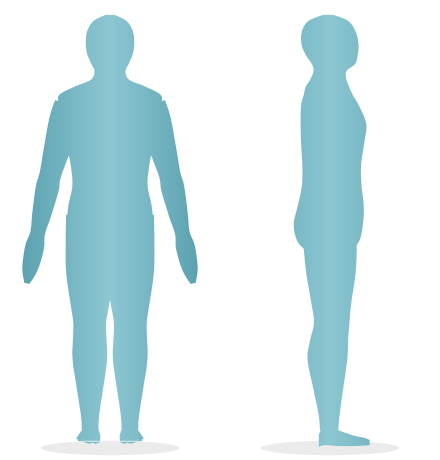
Men at BMI 24 have a solid, well-proportioned physique that most observers would describe simply as "normal" or "healthy-looking." The chest and shoulders are broad, the arms look strong and capable, and the stomach is flat to very gently rounded. There is no visible excess fat, but the body has a satisfying sense of mass and substance — not lean and wiry, but healthy and well-built.
For muscular men, BMI 24 can look quite built and athletic, as the weight reflects dense lean tissue rather than fat. For men with average muscle mass, the same BMI looks trim and moderately filled out. The face is comfortably proportioned with no gauntness and no softness — just naturally healthy proportions.
Many men describe BMI 24 as the "best they've looked" after weight loss — substantial enough to fill out clothes well and project a healthy, capable presence, without the softness or heaviness of higher weights. For men who train regularly, this BMI combined with active muscle maintenance produces an excellent physique.
At 178 cm, BMI 24 is 76.0 kg — still 8 kg below the UK male average of about 86 kg. The healthy range ends just 0.9 BMI units higher, meaning monitoring for gradual weight creep is important at this BMI. A gain of just 2.8 kg at this height would push BMI over 25.
Health Information for BMI 24 in Men
BMI 24 is the upper boundary of the healthy range — a position that is still entirely safe and normal, but one that warrants a watchful eye on long-term weight trends. Research shows that mean BMI increases by approximately 0.2–0.5 units per decade of adult life in Western populations, meaning a 30-year-old man at BMI 24 is at statistical risk of entering the overweight category by his 40s without conscious effort.
Cardiovascular health at BMI 24 is excellent. Blood pressure, lipid profiles, and fasting blood glucose are typically all within normal ranges. There is no meaningful clinical elevation in disease risk compared to BMIs of 20–22 at this level. The picture is one of robust, uncomplicated health.
For men at BMI 24 who are physically active, there is no reason to lose weight. Men who regularly exercise — particularly those who lift weights — may have a healthy body fat percentage (12–18%) at this BMI, with the weight comprising predominantly lean muscle. For sedentary men at BMI 24, the composition leans slightly more towards fat, making physical activity a more important health lever than weight reduction per se.
The transition from BMI 24 to BMI 25 (overweight) is only 2.8 kg at 178 cm. For men who are borderline at this level, focusing on maintaining rather than losing weight — through consistent activity, alcohol awareness, and eating habits — is the most practical strategy.
BMI 24 male: weight for every height
The weight that gives a BMI of 24 depends on height. The highlighted row is the 178 cm reference height used for the images on this page.
| Height | Kilograms | Stones | Pounds |
|---|---|---|---|
| 5ft 4in (163 cm) | 63.4 kg | 10 st 0 lb | 140 lb |
| 5ft 5in (165 cm) | 65.4 kg | 10 st 4 lb | 144 lb |
| 5ft 6in (168 cm) | 67.4 kg | 10 st 9 lb | 149 lb |
| 5ft 7in (170 cm) | 69.5 kg | 10 st 13 lb | 153 lb |
| 5ft 8in (173 cm) | 71.6 kg | 11 st 4 lb | 158 lb |
| 5ft 9in (175 cm) | 73.7 kg | 11 st 9 lb | 163 lb |
| 5ft 10in (178 cm) | 75.9 kg | 11 st 13 lb | 167 lb |
| 5ft 11in (180 cm) | 78.1 kg | 12 st 4 lb | 172 lb |
| 6ft 0in (183 cm) | 80.3 kg | 12 st 9 lb | 177 lb |
| 6ft 1in (185 cm) | 82.5 kg | 13 st 0 lb | 182 lb |
| 6ft 2in (188 cm) | 84.8 kg | 13 st 5 lb | 187 lb |
| 6ft 3in (190 cm) | 87.1 kg | 13 st 10 lb | 192 lb |
| 6ft 4in (193 cm) | 89.4 kg | 14 st 1 lb | 197 lb |
| 6ft 5in (196 cm) | 91.8 kg | 14 st 6 lb | 202 lb |
| 6ft 6in (198 cm) | 94.2 kg | 14 st 12 lb | 208 lb |
How far is BMI 24 from a healthy weight?
At 178 cm, BMI 24 is 76.0 kg (12 st 0 lb). The healthy range at this height runs from 58.6 kg to 78.9 kg, so a man at BMI 24 is 17.4 kg above the lower limit and 2.9 kg below the upper limit.
That puts BMI 24 near the edge of the range, so it is worth keeping an eye on your weight and waist.
What the NHS and NICE suggest at BMI 24
A BMI of 18.5 to 24.9 is in the healthy range, which is linked with the lowest average risk of weight-related illness. The aim here is to stay in the range as you get older, when weight tends to creep up by a small amount each year.
The UK Chief Medical Officers recommend at least 150 minutes of moderate activity a week, such as brisk walking or cycling, plus muscle-strengthening activity on two days. Check your waist now and then too: if it is more than half your height, it is worth acting even with a healthy BMI.
With NICE’s lower thresholds for people of South Asian, Chinese, other Asian, Middle Eastern, Black African or African-Caribbean background, BMI 24 counts as overweight, as risk of type 2 diabetes starts to rise at a lower BMI in these groups.
Whatever your BMI, measure your waist. At 178 cm, a waist under 89 cm (35 in) means a healthy waist-to-height ratio. Between 89 and 107 cm the risk is increased, and above 107 cm it is high.
Sources
The body shapes on this site are illustrations generated from height, weight and sex. They show a typical build and cannot show your own muscle, frame or fat distribution. BMI is a screening measure for adults aged 18 and over; it is not a diagnosis and is not valid during pregnancy. Speak to your GP or a registered dietitian for personal advice. Full disclaimer.